Classic Vanilla Birthday Cake
Few desserts carry as much joy as a homemade birthday cake placed at the center of a table filled with smiling faces. The gentle aroma of butter, vanilla, and freshly baked sponge has a way of turning an ordinary afternoon into a celebration worth remembering. I love how a simple cake can become part of family traditions, photographed year after year as candles are blown out and wishes are quietly made.
Classic Vanilla Birthday Cake remains my favorite because it proves that simple flavors never go out of style. A tender crumb, rich vanilla flavor, silky buttercream, and colorful sprinkles create a dessert that feels elegant without being complicated. I return to this recipe whenever I want dependable results, whether I am baking for children, adults, or anyone who appreciates a timeless slice of cake.
Why This Cake Always Delivers
I have baked countless celebration cakes over the years, and the recipes that last are rarely the most complicated ones. A balanced vanilla cake focuses on texture just as much as flavor, producing layers that stay moist while remaining sturdy enough to support frosting and decorations. Every ingredient has a purpose, and none of them tries to overpower the others.
Good vanilla deserves the spotlight here. Pure vanilla extract adds warmth and depth that artificial flavoring simply cannot match, while butter provides richness that makes every bite satisfying. Together they create the familiar taste that reminds many people of birthdays spent around the kitchen table.
The cake also adapts beautifully to different occasions. I can decorate it with fresh berries for an elegant dinner, colorful buttercream swirls for a child’s birthday, or smooth white frosting for a minimalist celebration. The foundation remains the same because the recipe itself is dependable.
Ingredients
For the Cake
- 2½ cups (315g) all-purpose flour
- 2½ teaspoons baking powder
- ½ teaspoon salt
- 1 cup (227g) unsalted butter, softened
- 1¾ cups (350g) granulated sugar
- 4 large eggs, room temperature
- 1 tablespoon pure vanilla extract
- 1 cup (240ml) whole milk, room temperature
For the Vanilla Buttercream
- 1½ cups (340g) unsalted butter, softened
- 5 cups (600g) powdered sugar, sifted
- 2 teaspoons pure vanilla extract
- 3 to 4 tablespoons heavy cream or whole milk
- ¼ teaspoon salt
Optional Decorations
- Rainbow sprinkles
- Fresh strawberries or raspberries
- White chocolate curls
- Birthday candles
Kitchen Equipment
The right equipment helps everything come together smoothly without adding unnecessary stress. I prepare two 8-inch round cake pans, parchment paper, a stand mixer or hand mixer, mixing bowls, measuring cups, measuring spoons, a cooling rack, offset spatula, and a cake turntable if I plan to decorate neatly.
Accurate measuring makes a noticeable difference in baking. I always level flour instead of scooping directly from the container because excess flour produces a dense cake. Room-temperature ingredients also blend more evenly, giving the batter a smoother consistency.
Preparing everything before mixing saves valuable time. Once the batter is ready, I want it in the oven quickly so the baking powder begins working at the ideal moment.
Step-By-Step Instructions
Begin by preheating the oven to 350°F (175°C). Grease two 8-inch cake pans, line the bottoms with parchment paper, and lightly grease the parchment as well. This extra step makes removing the cakes effortless after baking.
In a medium bowl, whisk together the flour, baking powder, and salt until everything is evenly distributed. Mixing the dry ingredients separately helps prevent pockets of baking powder from appearing in the finished cake.
Using a stand mixer or hand mixer, beat the softened butter and granulated sugar for about four to five minutes. The mixture should become noticeably lighter in both color and texture. This stage incorporates air into the batter, helping produce a soft, fluffy crumb.
Add the eggs one at a time, beating well after each addition. Stir in the vanilla extract until fully incorporated. The batter may look slightly curdled at this stage, but it will smooth out once the dry ingredients and milk are added.
Add one-third of the flour mixture to the butter mixture, followed by half the milk. Continue alternating until everything has been incorporated, ending with the remaining flour. Mix only until no dry streaks remain because overmixing develops gluten and creates a tougher cake.
Divide the batter evenly between the prepared pans and smooth the tops with a spatula. Bake for 28 to 32 minutes or until a toothpick inserted into the center comes out clean or with just a few moist crumbs attached.
Allow the cakes to cool inside their pans for about 10 minutes before turning them onto a wire rack. Let them cool completely before frosting. Warm cake and buttercream are never good companions because the frosting will melt and slide.
Making Smooth Vanilla Buttercream
While the cakes cool, prepare the frosting. Beat the softened butter until it becomes creamy and pale. This step creates the silky texture that makes buttercream easy to spread and pipe.
Gradually add the powdered sugar one cup at a time, mixing well after each addition. Add the vanilla extract, salt, and enough cream to reach a smooth, spreadable consistency. Continue beating for another three to four minutes until the frosting becomes light and fluffy.
If the buttercream feels too thick, I add another teaspoon of cream at a time. If it becomes too soft, a little extra powdered sugar quickly restores the proper consistency. Small adjustments make decorating much easier.
Assembling the Cake
Place one cooled cake layer on a serving plate or cake stand. Spread an even layer of buttercream across the surface, reaching almost to the edges so every slice includes a generous filling.
Position the second cake layer on top, gently pressing it into place without squeezing out the frosting. Apply a thin crumb coat over the entire cake and refrigerate it for about 20 minutes. This locks in loose crumbs and creates a clean surface for the final layer of frosting.
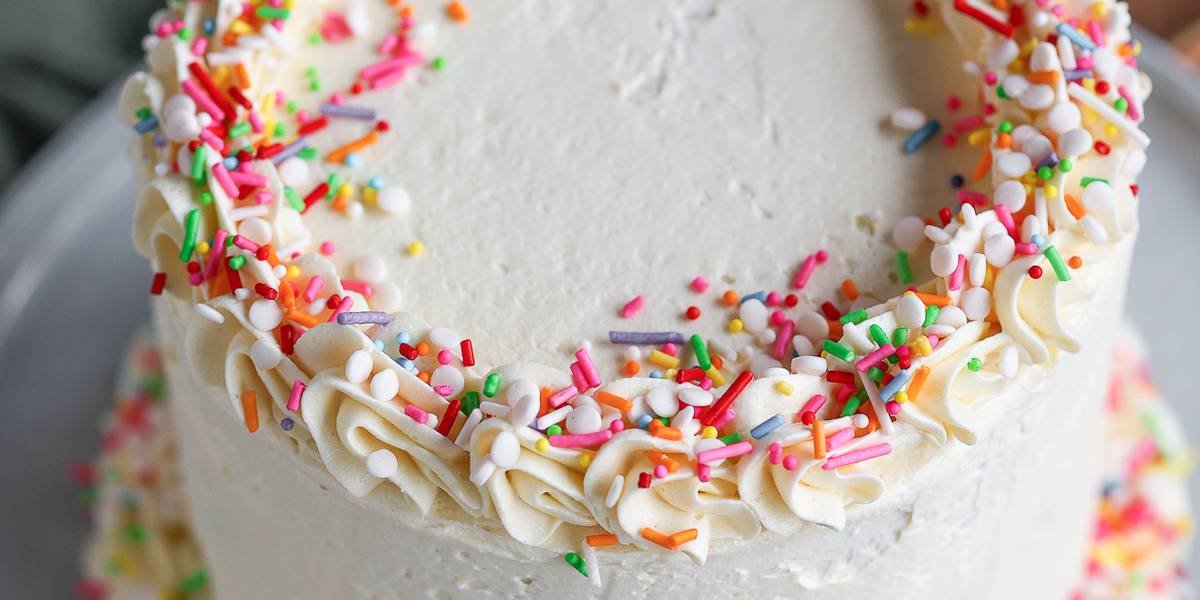
Finish by covering the cake with the remaining buttercream. Smooth the sides with an offset spatula or create decorative swirls for a more rustic appearance. Scatter rainbow sprinkles over the top and add candles just before serving.
Helpful Baking Tips
Fresh baking powder matters more than many people realize. Expired leavening loses strength, leaving cakes flatter and denser than intended. I replace mine regularly to guarantee consistent results.
Room-temperature butter, eggs, and milk blend together much more smoothly than cold ingredients. This produces an even batter that bakes uniformly from edge to center. Allowing everything to sit on the counter for about 30 minutes before baking makes a noticeable difference.
Avoid opening the oven door repeatedly during baking. Every opening releases heat and interrupts the rising process. I rely on the oven light whenever possible and begin checking for doneness only near the end of the baking time.
Decorating Ideas
Classic Vanilla Birthday Cake provides the perfect blank canvas for creative decorating. I often add colorful sprinkles around the edges, pipe simple buttercream rosettes, and finish with fresh berries for a cheerful presentation that suits almost any celebration.
Chocolate lovers can drizzle cooled ganache over the buttercream for extra richness while still allowing the vanilla flavor to shine. White chocolate curls also add elegance without making the decoration overly complicated.
Seasonal fruit offers another beautiful finishing touch. Fresh strawberries, blueberries, raspberries, or edible flowers create a naturally colorful appearance that feels both festive and refined. Even simple decorations look impressive when placed thoughtfully.
Storage Instructions
The finished cake stays fresh at room temperature for up to two days if covered properly. I use a cake dome or airtight container to prevent the sponge from drying out while keeping the buttercream soft.
For longer storage, refrigerate the cake for up to five days. I remove it from the refrigerator about 45 minutes before serving because butter-based frosting tastes much better once it has softened slightly.
The unfrosted cake layers freeze exceptionally well. I wrap each layer tightly in plastic wrap followed by aluminum foil before freezing for up to three months. After thawing overnight in the refrigerator, they taste remarkably fresh and are ready for decorating.
Delicious Variations
Although I always return to the traditional version, small adjustments can create exciting new flavors. A teaspoon of almond extract alongside the vanilla adds subtle complexity, while lemon zest brightens the cake without overpowering its classic character.
For a festive filling, I sometimes spread raspberry preserves beneath the buttercream. The gentle tartness balances the sweetness and creates beautiful slices with a colorful center that surprises guests.
Fresh fruit folded into the filling or layered between the cakes also works wonderfully. Sliced strawberries, blueberries, or peaches pair beautifully with vanilla, turning the dessert into something that feels both comforting and fresh.
Final Thoughts
Classic Vanilla Birthday Cake reminds me that memorable desserts rarely depend on complicated techniques or unusual ingredients. Careful mixing, quality vanilla, fresh butter, and a little patience produce a cake that feels special every single time. It is the kind of recipe that becomes part of family celebrations, passed from one birthday to the next with happy memories attached.
I continue baking this cake because it never disappoints, whether the gathering includes two people or twenty. Each slice delivers soft vanilla sponge, creamy buttercream, and just enough sweetness to mark the occasion perfectly. Once you make this Classic Vanilla Birthday Cake from scratch, it is likely to become the recipe you reach for whenever another celebration appears on the calendar.